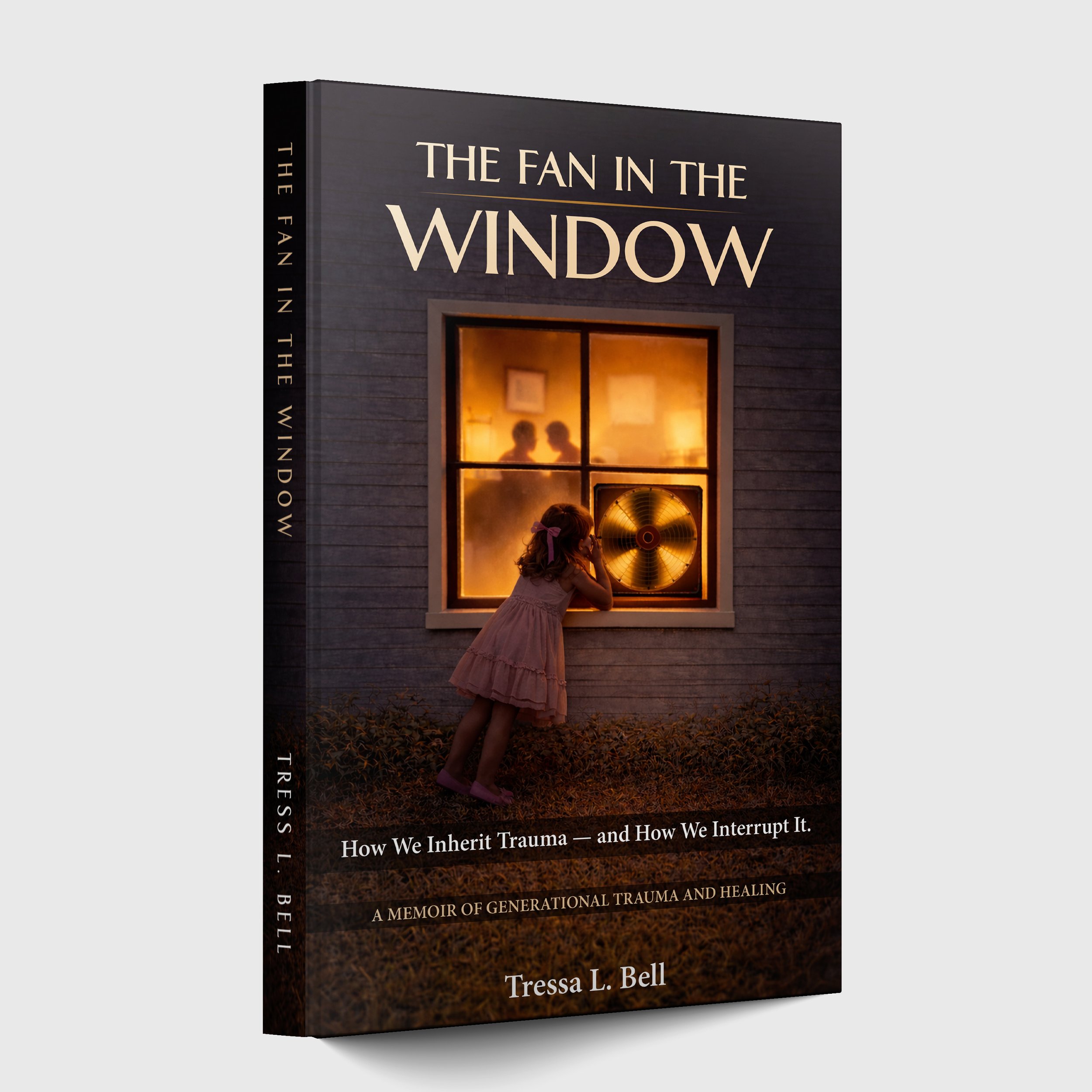
Explore trauma, regulation, and generational change through story and science
“This didn’t start with you…but you can interrupt it!”
About the Memoir
A memoir about generational trauma, domestic violence, and the complicated work of interruption.
Told through lived experience and informed by trauma research, this story explores how patterns move through families — and how they can change.
Have you ever felt patterns repeat in your life without knowing why?
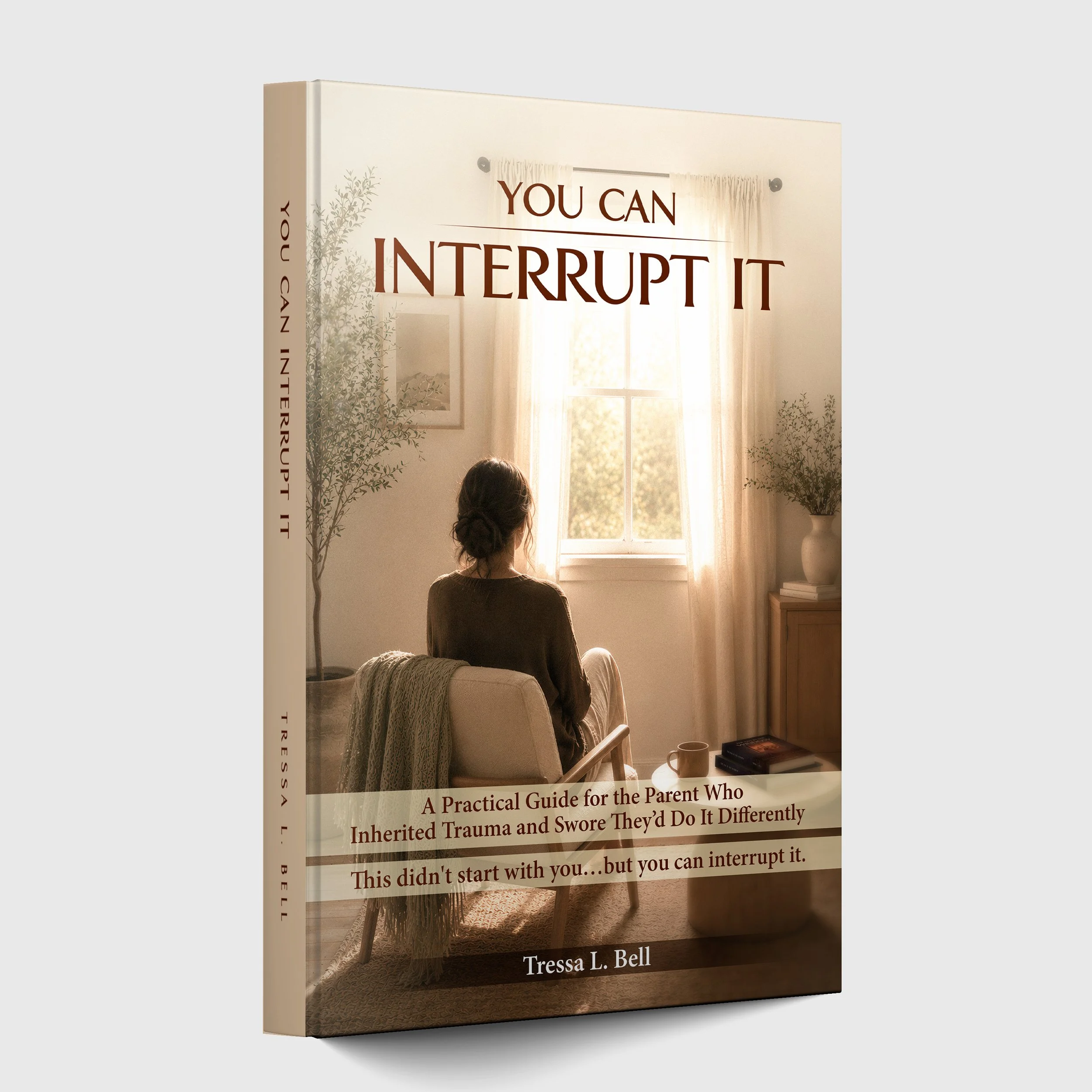
You swore you would do it differently.
You promised yourself your children would never carry what you carried. And still—in the hard moments—you hear a voice that sounds like the one you grew up with. You feel a reaction rise before you can stop it. And you wonder, quietly, if some things are simply passed down. If you are strong enough to break what was handed to you.
You are.
You Can Interrupt It is a practical, science-grounded guide for the survivor-turned-parent—the adult trying to break generational cycles without ever having been shown how. Written by registered nurse and former forensic nurse Tressa L. Bell, herself a survivor of childhood trauma and domestic violence, it brings together two things that rarely share a page: clinical precision and lived experience.
This is not a book about blame. It is not about becoming a perfect parent. And it will never pretend that healing is simple.
Instead, it shows you how to recognize the patterns you inherited, understand the biology beneath your reactions without shame, and make the small, repeatable choices that change a family's story—one moment at a time.
Inside, you'll learn:
Why your nervous system reacts the way it does—and why that is not a character flaw
How inherited trauma actually passes from one generation to the next
What to do in the half-second between a trigger and a reaction
How to repair with your children after you get it wrong—and why repair matters more than perfection
How to set boundaries with the family that shaped you
The Interruption Model—a practical framework for moving from inherited patterns to intentional parenting
You will not find vague inspiration here. You will find something you can actually do.
If you are the one in your family who decided the cycle stops with you—the one doing the hard, unglamorous, deeply human work of change—this book was written for you.
You are not responsible for the wounds you inherited. But you can become responsible for what happens next.
A companion to the memoir The Fan in the Window: How We Inherit Trauma—And How We Interrupt It.
"This didn't start with you…but you can interrupt it." 🪟
The Fan in the Window Podcast
About Tressa

Most books about generational trauma are written by therapists writing about their clients.
Mine is written by someone who lived inside the pattern, and then did the work herself.
Tressa L. Bell, MBA, BSN, RN, is a registered nurse, former forensic nurse examiner, author, podcast host, and speaker. She is also a survivor of childhood trauma, child sexual abuse, and domestic violence. For most of her life, she understood trauma from the inside first, before she had any research to explain it.
Her work in emergency and forensic nursing gave her language for things she'd already lived: hypervigilance, appeasement, a nervous system that never fully stood down. She spent years sitting with survivors on the worst days of their lives, translating their experiences into the language of evidence and care. What she could not have told you then was that she was also living inside her own inherited pattern.
Her debut memoir, The Fan in the Window, launched in April 2026. You Can Interrupt It: A Practical Guide for the Parent Who Inherited Trauma and Swore They'd Do It Differently followed in August 2026, the practical guide that grew out of what she learned doing the work the memoir describes. Both are available now.
She is the founder of My Sweet Nurse Life, LLC and the host of the podcast The Fan in the Window: Interrupting What We Inherit. She lives in Maryland with her husband, Jimmy. She is a mother of four and a grandmother. The work of interruption is ongoing.
“What I had called weakness began to look more like survival.”
Why This Matters
Trauma is rarely isolated.
It moves through families quietly.
Through silence. Through survival. Through patterns that no one names.
Domestic violence. Emotional volatility. Addiction. Control.
What we inherit doesn’t always look dramatic. Sometimes it looks normal.
Until someone interrupts it.
The Fan in the Window is not just a memoir.
It is a reflection on:
How children adapt to chaos
How silence becomes protection
How trauma can look like personality
How love and harm can exist in the same room
And how cycles can be disrupted — intentionally
This story matters because many of us are living inside inherited patterns we did not choose.
It matters because healing is not about blame.
It is about awareness.
And awareness changes trajectories.
It matters because interruption is possible.
Not perfectly.
Not all at once.
But deliberately.
If you have ever wondered:
Why certain dynamics repeat in your relationships
Why your nervous system feels on guard
Why you became “the strong one,” “the fixer,” or “the quiet one”
How to parent differently than you were parented
You are not alone.
And you are not broken.
This work — the work of noticing, naming, and interrupting — ripples outward. Into children. Into partnerships. Into communities.
That is why this matters.
You don't have to start with the whole story. Start with one small thing. The First Interruption is a free kit to help you notice and name what you inherited—and try one interruption this week.
“It’s complicated. It’s honest. It holds more than one truth at the same time.”
What Early Readers Are Saying
“The Fan in the Window is a deeply honest and courageous memoir about the long shadow of generational trauma and the difficult work of healing. Tressa Bell writes with clarity and humility as she reflects on family, survival, and the quiet ways trauma can echo through generations. What makes this book powerful is her willingness to take accountability while still offering compassion—for herself, her mother, and her children. It’s a moving reminder that while cycles of pain may not end perfectly, they can bend through awareness, courage, and love.”
The Fan in the Window has resonated with clinicians, survivors, and readers navigating generational trauma.
“This is a powerful and deeply honest memoir about leaving an abusive relationship and confronting the generational patterns that made it feel familiar. With courage and vulnerability, the author traces the slow, nonlinear path of healing while learning to reclaim her voice, boundaries, and sense of self. This book is very thoughtful, well-researched, easy to read, and leads you to reflect on your own experiences.”
“This book was an interesting read. I love the way the author shows how early experiences can shape perceptions, relationships, and emotional responses. It is a very emotional story that tells how trauma can be passed down through generations until awareness can be the first step towards breaking that cycle. It really helps open your eyes and helps u realize how certain traumas can affect people’s lives and how those people deal with those certain traumas.”
“From the first chapter, I was hooked. Many of her life experiences mirrored my own experiences. Tressa was very forthcoming with her healing journey and offers hope to those who are still struggling. I highly recommend this book.”
“I love your book, and I say this as a man who reads forty to fifty books a year across most genres! So, I know good writing when I read it. Your concise and precise style is enjoyably readable. I couldn’t put it down, and many of your points are so well-stated and both scientifically and emotionally compelling that I read them over several times to absorb as much as I could. Autobiographical psychology, like your story, is a mirror. The astute reader begins to see reflected vignettes from his or her own life in your story, and it causes one to pause and contemplate past trauma and present outcomes, what happened and what could have been, balanced by a forthright honesty and reality. You then bring in the appropriate spiritual aspect of letting go of thoughts of what was or will be and living mindfully in the present. Bringing the “fan in the window” full circle to end the book is very well done. You really put yourself out there. That’s courageous and admirable! Thank you for sharing it with me. I hope you’ll write more.”
Interested in endorsing the book?
If you are a clinician, advocate, or reader who would like to provide a testimonial, I welcome your thoughts.
“Healing begins not with blame, but with awareness.”
Subscribe to Substack

Substack is my writing space where I explore:
Generational trauma and interruption
Trauma-informed parenting
Nervous system awareness
Memoir reflections and behind-the-scenes of the book
Podcast updates and resources
Subscribers receive essays, reflection guides, and early access to new projects.
Contact
For media inquiries, podcast invitations, speaking requests, or general questions, please use the form below.
I read every message and will respond as I am able.
I appreciate thoughtful correspondence and the courage it takes to reach out.
tressa@thefaninthewindow.com